Predictability is designed.
Also curious about the personal story behind ICR?
More than ten years of building. At least 30,000 hours invested. Driven by a conviction, without any guarantee of success.
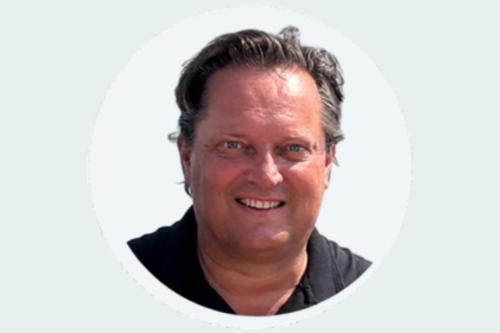
Why I developed ICR — Paul Joore
My vision is simple. Turning it into a practical, comprehensive system was not. I learned that when people want to achieve something that matters to them, they want their performance and results to be as predictable as possible. What I believe is this: predictable performance and results require clarity. Clarity gives leaders and team members confidence — in the direction, in one another and in how the organization works. From that confidence comes peace of mind.
Clarity. Confidence. Peace of Mind.
But what must be clear first? Who the organization exists for and what future it should make possible for them. That starts with identifying its ultimate stakeholders. These may be an entrepreneur or family owner, the owners or shareholders of a corporate group, or the people a public or nonprofit organization ultimately exists to serve.
The organization is the means; their Ambition — looking more than ten years ahead — provides the shared reference point for assessing whether the business model, organizational choices and daily execution bring the desired future closer. Making that future explicit helps prevent today’s possibilities and limitations from defining what they seek to achieve. That Ambition gives direction to the business model, the organization you build and the steps you take. ICR helps you connect that direction to daily execution.
That is why I developed ICR. Good results can hide a vulnerable organization. As an entrepreneur, business economist, former CFO and interim manager, I have learned to look beyond the results themselves. Good results matter. But they do not necessarily reveal how well an organization is designed.
Leaders and other key people can compensate for unclear responsibilities, missing agreements, fragmented information or processes that do not connect. Their knowledge, judgment and relationships keep things moving. That contribution is valuable. Yet when too much remains in individual people’s heads, the organization becomes dependent on their availability.
I wanted to help organizations make that dependence visible and build a stronger foundation beneath their results — making them more resilient and less vulnerable.
A shared framework for organizational quality
Every organization is organized, consciously or unconsciously. Much of its design reflects the knowledge, experience and convictions of the people involved. But how do you know what you are overlooking? And how do you establish whether the parts work effectively together?
Having the parts in place does not establish their quality. Having everything documented does not establish coherence. And good results today do not guarantee predictable results tomorrow.
The ICR Organizational Operating System provides a standardized framework for making the relevant organizational playing field visible and assessing the quality of its implementation.
It helps leaders and team members examine how their organization is structured, how its parts connect and how effectively and efficiently they work together — including responsibilities, risks and the reliability of management information.
See the whole field. Make explicit. Connect.
Your ambition. Your choices.
The organization is the means through which its ultimate stakeholders seek to realize their ambition. That ambition gives direction to the choices that follow. ICR does not make those choices for you. Your organization determines its own business model, strategy, priorities and approach, based on its ambition and context.
Route ICR connects those choices into one integrated plan of action: from ambition and the business model to continuity goals, strategic objectives, responsibilities, short-term goals and actions, reporting and continuous improvement. Risks and controls remain connected throughout.
You can start with the situation or recurring problem that needs attention now, while keeping your ambition and the wider organizational connections in view.
The logic behind ICR begins with organizational design: first clarify the future the organization should make possible, then determine what is needed to achieve it. In everyday practice, this becomes a continuous cycle of connected decisions, execution, evaluation and improvement — without requiring everyone to start at the beginning.
Built for people working together
Clarity is a human experience. Leaders and team members need to understand the direction, what is expected of them and how their work connects. Different perspectives are valuable. They reveal assumptions, dependencies and expectations that might otherwise remain implicit.
The five ICR Growth Principles — Targeted Focus, Teamintuition, Culture of Improvement, InControl and Results-driven — provide a continuous lens for examining how people collaborate, make decisions and improve.
Through thoughtful organizational design and daily practice, these principles come to life. Teamintuition develops as people become better attuned to one another and find each other naturally in the work needed to realize the organization’s vision and mission.
From organizational framework to daily practice
The ICR Organizational Operating System provides the organizational framework. The ICR Growth & Success SaaS Platform is the software that helps you put that framework into daily practice. It connects goals, responsibilities, risks, actions and progress, so organizational development becomes part of how you lead, collaborate and improve every day.
ICR works with your existing methodologies and systems. Consultants, coaches, accountants and other advisers can contribute their expertise and retain their own approaches within the shared framework. The system is carefully tailored to SMEs, business units of multinationals, nonprofit organizations and government organizations.
More room to lead
My aim is to help people build organizations that rely less on individuals having to hold everything together. Organizations where responsibilities are clear, uncertainties are visible and people can act independently while staying connected to the whole.
For businesses, that supports continuity and long-term value development. For nonprofit and government organizations, it supports the ability to fulfil their purpose and deliver sustainable impact.
Predictability does not mean eliminating uncertainty. It means designing an organization that can recognize uncertainty, make informed choices and adapt.
Predictability is designed.
Paul Joore
Founder of the ICR Organizational Operating System
A clear vision. Now just build it …
That “just” took more than ten years. Below, you can read the personal story behind ICR.
How long do you work on something before it becomes a reality?
My personal story of more than ten years building ICR — Paul Joore
For me, it has now been more than ten years. And at least 30,000 hours. Pure investment. Driven by my own conviction and, fortunately, that of many others. But with no guarantee of success.
It began with a question that increasingly occupied my mind through my work and experience as an interim manager, public accountant, CFO and business coach to entrepreneurs and organizations:
How do you make the full organizational playing field clear and practically manageable for the people responsible for it every day? And how do you bring your whole team with you?
Peace of mind
There is a wealth of knowledge about how to organize. But as an entrepreneur or leader, you have to bring all those insights together yourself. Discover what is missing. Make sure ambition, the business model, strategy and daily work connect. And those connections exist mainly in people’s heads.
I wanted to turn that into one coherent system. Explicit, understandable and usable. With a view of the whole and the ability to start with a single topic.
Looking back, I can say that I had little idea of what building it would demand. Building peace of mind for others. While I had very little peace of mind myself throughout the process. How’s that for a contradiction …
From insight to a working system
Being able to explain an insight is one thing. Developing it so that someone else can work with it independently takes much more.
Every step has to make sense. The terms have to be clear. The parts have to fit together. And it has to work in everyday practice, where people have their own habits and their days are almost always full.
You cannot do it alone
So I kept developing, testing, simplifying and rebuilding. Always looking for the right people around me. Because you cannot do it alone. Fortunately, I have now been working with a fantastic team of developers for several years. People you absolutely need to turn what you can picture into something that actually works.
Yet another sprint
And there were early users and pilots. They saw the added value, but also revealed what was still missing. Sometimes that meant returning to something I thought was finished. That really stung!
Those were difficult moments. Lying awake night after night, not knowing how to move forward. You have already put so much time, energy and money into it. You want to move forward. You have to. And yet, first, you have to go back to the drawing board. Again. Just like the fitness training when I played football as a boy. After every sprint, you hoped to hear: “Well done, lads. We’re finished. Time for a game.” But no… a short blast of the whistle, and yet another sprint. Completely exhausted.
Meanwhile, everyday life goes on. Work that pays for the development. Responsibilities at home. Setbacks in your personal life, too. And constantly weighing up how much time, energy and room you can make for it. Not to mention the money.
Building something others cannot yet see
Perhaps the hardest part is spending years working on something you can already picture, while you cannot yet show it fully to others. There was no familiar example I could point to. No existing product that allowed me to simply say: “That, but better.” Frustrating, I can tell you. Because you just cannot get it across. “What on earth is Paul working on? He had such a good thing going!”
But you can see what it could become. Unfortunately, you can also see, every day, how much still needs to be done.
Why I kept going
I kept going because the question I started with remained too important to let go. People carry an enormous responsibility for their organizations. How much would it help if they could see the whole, work together with a shared focus and become less dependent on everything one person holds in their head? Many of them have never explicitly been taught how to create structure and coherence in an organization.
It’s built
But at last, the ICR Organizational Operating System is here. Brought to life in everyday practice, 24/7, through the ICR Growth & Success SaaS Platform.
Looking back on all those years, I am proud of what has taken shape. I also feel how much of my life has gone into it. And how much of the lives of the people dear to me.
A moment to enjoy it. But the next challenge is already at the door and demands something entirely different: making sure entrepreneurs and other organizational leaders discover ICR, start using it and experience that it helps them. Delivering results strong enough to earn, step by step, a wonderful international community of ICR ambassadors.
It’s built. Now I “just” have to conquer the world.
Hold on tight to your dreams.
Paul Joore
Founder of the ICR Organizational Operating System
What does this mean for your organization?
Discover how your organization stands across the eight essential building blocks of ICR.