Frequently Asked Questions
Find clear answers to common questions about the ICR Organizational Operating System, how it works and how it helps organizations create greater clarity, coherence and predictability.
Understanding ICR
What is the ICR Organizational Operating System?
ICR is an Organizational Operating System that provides a structured framework and route for developing an organization as a coherent whole. It makes the relevant organizational playing field visible and helps organizations make explicit how ambition, business model, strategy, responsibilities, risks, execution and improvement connect.
What problem does ICR help solve?
Organizations often develop different parts of the business separately, while responsibilities, decisions, risks and dependencies remain partly implicit. ICR creates one shared organizational framework that makes these elements visible and connects them, helping teams identify uncertainty, reduce unnecessary key-person dependency and improve organizational predictability.
What does ICR mean by organizational predictability?
Predictability does not mean guaranteeing results or predicting the future. It means increasing clarity about the factors that influence results — including objectives, responsibilities, risks, progress, dependencies and deviations — so that an organization can respond earlier and more deliberately.
How does ICR connect ambition, strategy and execution?
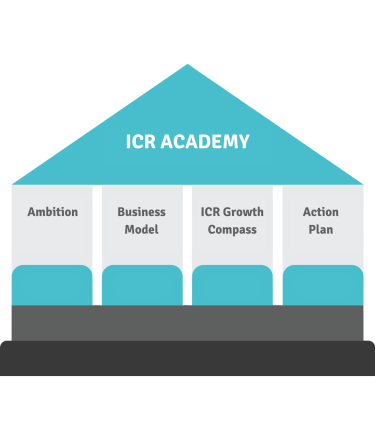
Route ICR starts with the long-term Ambition of the ultimate stakeholder(s). From there, the organization defines its Business Model and translates its Ambition and Business Model into strategic objectives, responsibilities, risks and controls, short-term goals and actions, reporting and continuous improvement. This creates a visible connection from long-term direction to day-to-day execution.
Does ICR tell us how to run our organization?
No. ICR provides the organizational framework, route and reference points, but it does not make the organization’s substantive choices. Those choices remain with the organization and its people. ICR helps make those choices explicit, connect them and assess how effectively the organization has organized itself around them.
Is ICR another management methodology?
No. ICR is designed to provide an overarching organizational structure rather than replace the methodologies you already use. Existing approaches and methods can continue to be used within the relevant parts of the organization. ICR helps show how they fit into the bigger picture and how the different parts connect.
Does ICR replace our existing software systems?
No. ICR is not intended to replace systems such as accounting, CRM, HR or project management software. Those systems support specific processes and activities. ICR provides the organizational context that connects direction, responsibilities, objectives, risks, execution and improvement.
Do we need to implement the entire ICR framework at once?
No. One of the ICR Growth Principles is “Start Where You Are.” Organizations can start from their current situation and work step by step through Route ICR. The framework provides the complete organizational playing field, while priorities determine where attention is needed first.
How does ICR help reduce key-person dependency?
Key-person dependency often exists because knowledge, responsibilities, decisions, relationships or ways of working depend heavily on particular individuals. ICR helps make these dependencies visible and supports teams in making responsibilities, risks, controls and ways of working more explicit and connected. The aim is not to make people less important, but to make the organization less unnecessarily dependent on individuals
Who is ICR designed for?
ICR is designed for organizations and organizational units that want to develop in a more structured and coherent way. It can be used by businesses, subsidiaries, non-profit and societal organizations, and other teams that want greater clarity, stronger alignment, less unnecessary dependency and more predictable performance.
Can ICR be used for a specific issue without reviewing the entire organization first?
Yes. Organizations can enter Route ICR from a specific situation or issue they are currently facing. ICR helps place that issue within the broader organizational context, so that related objectives, responsibilities, risks and dependencies can be considered without losing sight of the organization as a whole.
Can business coaches, consultants and advisors use ICR with their clients?
Yes. ICR can provide professionals with a shared organizational framework for working with clients. It helps make the broader organizational playing field visible, identify areas that need attention and connect individual improvement initiatives to the organization as a whole. The professional remains responsible for their own expertise and approach; ICR provides the structure in which that expertise can be applied.
Does ICR replace the expertise or methodology of an advisor?
No. ICR is designed to complement professional expertise, not replace it. Coaches, consultants, accountants and other advisors can continue to use their own methodologies and specialist knowledge. ICR provides an overarching organizational framework that helps determine where that expertise is relevant and how individual interventions connect to the organization’s Ambition and broader development.
How can ICR help advisors identify what an organization needs?
ICR makes the organizational playing field visible and provides a structured way to assess how effectively different parts of the organization are being addressed. This can help advisors and their clients distinguish symptoms from underlying organizational issues, identify blind spots and determine where deeper expertise or intervention may be valuable.
Can ICR support an ongoing relationship between an advisor and a client?
Yes. Organizational development is not a one-time exercise. ICR provides a continuous structure for reviewing objectives, risks, actions, progress and changes over time. This can give advisors and clients a shared reference point for recurring conversations and help make development and follow-up more systematic.
Understanding ICR
What is the ICR Organizational Operating System?
ICR is an Organizational Operating System that provides a structured framework and route for developing an organization as a coherent whole. It makes the relevant organizational playing field visible and helps organizations make explicit how ambition, business model, strategy, responsibilities, risks, execution and improvement connect.
What problem does ICR help solve?
Organizations often develop different parts of the business separately, while responsibilities, decisions, risks and dependencies remain partly implicit. ICR creates one shared organizational framework that makes these elements visible and connects them, helping teams identify uncertainty, reduce unnecessary key-person dependency and improve organizational predictability.
What does ICR mean by organizational predictability?
Predictability does not mean guaranteeing results or predicting the future. It means increasing clarity about the factors that influence results — including objectives, responsibilities, risks, progress, dependencies and deviations — so that an organization can respond earlier and more deliberately.
How does ICR connect ambition, strategy and execution?
Route ICR starts with the long-term Ambition of the ultimate stakeholder(s). From there, the organization defines its Business Model and translates its Ambition and Business Model into strategic objectives, responsibilities, risks and controls, short-term goals and actions, reporting and continuous improvement. This creates a visible connection from long-term direction to day-to-day execution.
Does ICR tell us how to run our organization?
No. ICR provides the organizational framework, route and reference points, but it does not make the organization’s substantive choices. Those choices remain with the organization and its people. ICR helps make those choices explicit, connect them and assess how effectively the organization has organized itself around them.
Is ICR another management methodology?
No. ICR is designed to provide an overarching organizational structure rather than replace the methodologies you already use. Existing approaches and methods can continue to be used within the relevant parts of the organization. ICR helps show how they fit into the bigger picture and how the different parts connect.
Does ICR replace our existing software systems?
No. ICR is not intended to replace systems such as accounting, CRM, HR or project management software. Those systems support specific processes and activities. ICR provides the organizational context that connects direction, responsibilities, objectives, risks, execution and improvement.
Do we need to implement the entire ICR framework at once?
No. One of the ICR Growth Principles is “Start Where You Are.” Organizations can start from their current situation and work step by step through Route ICR. The framework provides the complete organizational playing field, while priorities determine where attention is needed first.
How does ICR help reduce key-person dependency?
Key-person dependency often exists because knowledge, responsibilities, decisions, relationships or ways of working depend heavily on particular individuals. ICR helps make these dependencies visible and supports teams in making responsibilities, risks, controls and ways of working more explicit and connected. The aim is not to make people less important, but to make the organization less unnecessarily dependent on individuals
Who is ICR designed for?
ICR is designed for organizations and organizational units that want to develop in a more structured and coherent way. It can be used by businesses, subsidiaries, non-profit and societal organizations, and other teams that want greater clarity, stronger alignment, less unnecessary dependency and more predictable performance.
Can ICR be used for a specific issue without reviewing the entire organization first?
Yes. Organizations can enter Route ICR from a specific situation or issue they are currently facing. ICR helps place that issue within the broader organizational context, so that related objectives, responsibilities, risks and dependencies can be considered without losing sight of the organization as a whole.
Can business coaches, consultants and advisors use ICR with their clients?
Yes. ICR can provide professionals with a shared organizational framework for working with clients. It helps make the broader organizational playing field visible, identify areas that need attention and connect individual improvement initiatives to the organization as a whole. The professional remains responsible for their own expertise and approach; ICR provides the structure in which that expertise can be applied.
Does ICR replace the expertise or methodology of an advisor?
No. ICR is designed to complement professional expertise, not replace it. Coaches, consultants, accountants and other advisors can continue to use their own methodologies and specialist knowledge. ICR provides an overarching organizational framework that helps determine where that expertise is relevant and how individual interventions connect to the organization’s Ambition and broader development.
How can ICR help advisors identify what an organization needs?
ICR makes the organizational playing field visible and provides a structured way to assess how effectively different parts of the organization are being addressed. This can help advisors and their clients distinguish symptoms from underlying organizational issues, identify blind spots and determine where deeper expertise or intervention may be valuable.
Can ICR support an ongoing relationship between an advisor and a client?
Yes. Organizational development is not a one-time exercise. ICR provides a continuous structure for reviewing objectives, risks, actions, progress and changes over time. This can give advisors and clients a shared reference point for recurring conversations and help make development and follow-up more systematic.